FAQ
Circuit Breaker Problems: 7 Warning Signs You Shouldn't Ignore
Here's something most homeowners don't realize: when you think you have a "bad breaker," you're usually wrong — but not in a good way. The majority of breaker complaints turn out to be a healthy breaker doing exactly what it's supposed to do: shutting off power because something on the circuit is wrong. The dangerous exception is the breaker that's genuinely failing — and that one rarely announces itself until it's a fire hazard sitting quietly in your panel.
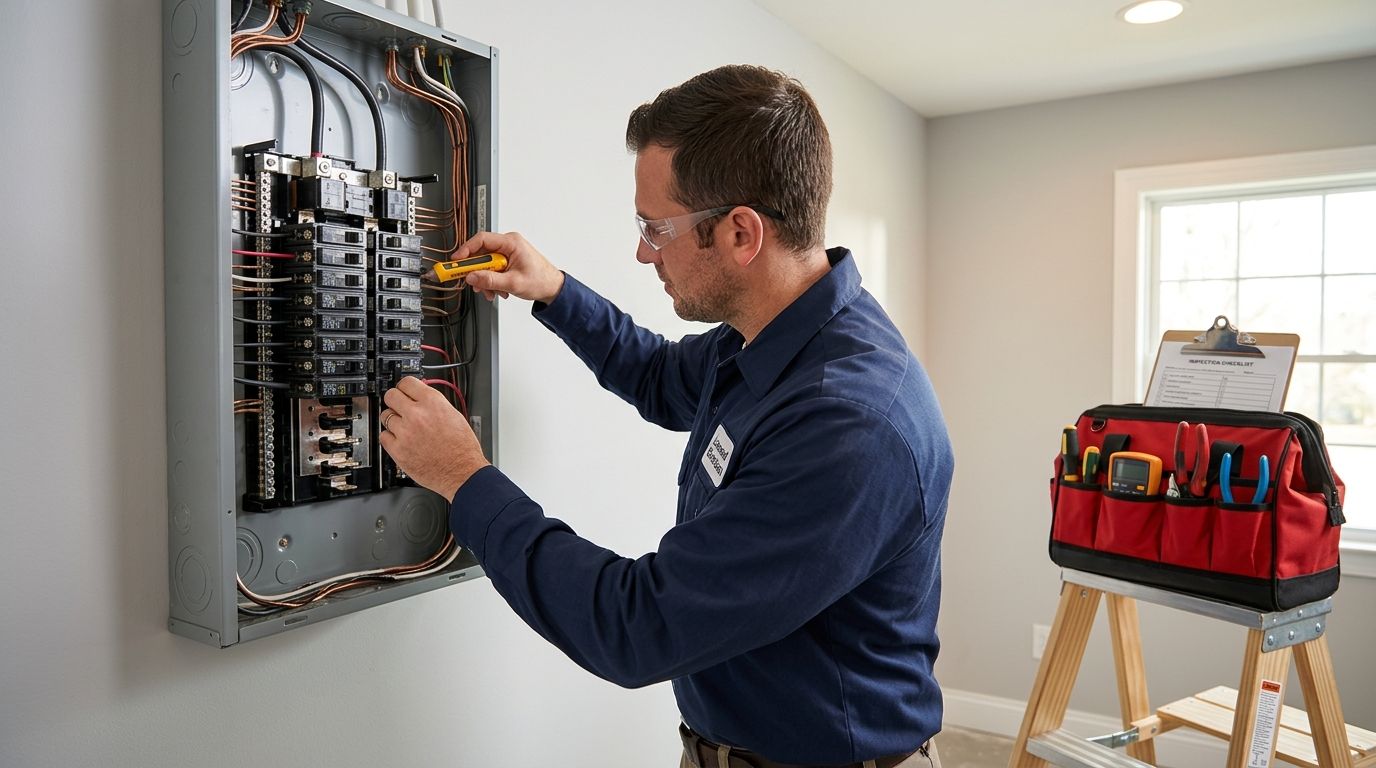
Knowing the difference matters. Below,
JANCO ELECTRIC — breaks down the seven warning signs of breaker trouble, ordered from "shut it off and call now" to "get it looked at soon," along with what's actually going on behind the panel cover and why it matters.
Why homeowners trust JANCO ELECTRIC
JANCO ELECTRIC is a licensed New Jersey electrical contractor,
NJ Electrical License #16353, with
18 years of experience serving Manalapan Township and the surrounding communities of Monmouth and Middlesex Counties, Central New Jersey.
Our electrical troubleshooting guidance was updated August 2026 written by
J. Whitley, Licensed Master Electrician and New Jersey State Electrical Instructor. Our team performs circuit-breaker inspections and expert electrical diagnoses every week, helping homeowners identify whether a problem involves the breaker, wiring, an appliance, or the electrical panel itself.we back our workmanship with a
100% satisfaction guarantee.
Same-Day Diagnosis · Straight Answers · Upfront Flat Rate Pricing · 24/7 Emergency Service**
**Get a Breaker Diagnosis → (732) 786-1800
Why Breakers Exist in the First Place
Before the warning signs, it helps to understand the job a breaker is doing. A circuit breaker is a safety device, not a switch. Its only purpose is to cut power the instant the current flowing through it exceeds what the wire behind it can safely handle. Too much current means too much heat, and too much heat inside a wall is how electrical fires start.
That's why "the breaker keeps tripping" is often good news — it's protecting you. It's also why bypassing or oversizing a breaker is so dangerous: you're removing the one thing standing between an overloaded wire and a fire.
๐ฒ The 7 Warning Signs, Ranked by Urgency
The rule of thumb: **heat, smell, and sound mean something is failing right now.** Trip patterns mean something needs diagnosing. Handle feel points to wear and age.
1 — EMERGENCY: A burning or "fishy" smell near the panel
When electrical insulation overheats and plastic components begin to arc, they release a sharp burnt odor — often described as fishy or like hot electronics. This smell means something inside the panel is cooking as you read this: a loose connection, an arcing breaker, or a melting bus bar. If you can safely reach the main breaker, shut it off and call immediately. This is not a "wait until morning" situation.
2 — EMERGENCY: A breaker or panel that's hot to the touch
Breakers normally sit at room temperature, maybe slightly warm when a circuit is working hard. If you can't comfortably rest a finger on a breaker — or the panel's face feels warm — you likely have a high-resistance connection turning electrical current directly into heat, just inches from your home's wiring. Electricians call this pre-fire behavior for good reason.
3 — EMERGENCY: Buzzing, sizzling, hissing, or crackling
A properly working panel makes essentially no noise. A very faint hum under heavy load can be normal, but buzzing, sizzling, or crackling is the unmistakable sound of arcing — electricity jumping across a gap it shouldn't. Arcing burns away metal contacts, generates intense localized heat, and is a leading cause of panel fires. Treat it exactly like a burning smell: main off if safe, then call.
4 - URGENT: Scorch marks, discoloration, or melted plastic
Brown or black staining around a breaker, a warped or melted handle, or charring on the panel face all tell the same story — overheating or arcing has already happened here. Even if the breaker still functions, the connection or the metal "stab" it clips onto is damaged. Damaged connections don't heal; they fail again, and usually run hotter the next time.
5 - URGENT: Won't reset, or won't stay reset
These are two separate problems with two separate causes:
- **Trips instantly on every reset:** There's an active short circuit or ground fault on the line. Each reset slams the fault with full current — stop resetting and get it diagnosed.
- **Handle flops and never clicks firmly to ON:** The internal trip mechanism is broken. The breaker needs replacing; it can no longer protect the circuit.
6 - DIAGNOSE SOON: Trips repeatedly on little or no load
A breaker that trips when barely anything is running is telling you one of two things. Either it's worn out — breakers weaken with every trip and can eventually trip below their rated amperage — or it's reacting to a hidden fault: moisture in an outdoor outlet, wiring chewed by rodents, or a shared neutral confusing an AFCI breaker. Only a circuit tester and a methodical trace will tell you which.
7- DIAGNOSE SOON: A loose, floppy, or unusually stiff handle
A healthy breaker handle snaps firmly between OFF and ON. One that wobbles, drifts to the middle "tripped" position, or has lost its crisp click has worn internal springs — the very mechanism responsible for tripping fast enough to matter during a fault. Replacing it now is far cheaper than discovering it can't trip during a real emergency.
๐ฒ
A Few Signs Worth Adding to Your Radar
Beyond the classic seven, a couple of related symptoms are worth knowing about:
- **Flickering or dimming lights** on a specific circuit, especially when an appliance kicks on, can point to a loose connection at the breaker or a circuit that's overloaded.
- **Frequently tripping GFCI or AFCI breakers** aren't always faulty — these specialized breakers are more sensitive by design and can be triggered by aging, moisture, or certain appliances. But a GFCI / AFCI that trips constantly still deserves a look.
- **Breakers that feel warm but show no other symptom** — worth mentioning during any routine electrical visit, since it can be an early indicator of a developing loose connection.
๐ฒ
Is It the Breaker, the Circuit, or the Panel?
This is the question that separates an honest local electrician . Swapping a breaker won't fix a problem that lives in the wiring — or in a defective panel.
| What's Actually Wrong | Typical Cost | Signs & What It Takes to Fix |
| **The breaker** | $150–$400 | Worn mechanism, floppy handle, trips below rating, fails the tester. A direct swap matched to your panel make and series — after the cause is verified. |
| **The circuit** | Quoted after diagnosis | Overloads, shorts, ground faults, and shared neutrals all trip perfectly good breakers. The real fix is in the wiring: a new dedicated circuit, a repaired junction, or separated neutrals — not a parts swap. |
| **The panel** | $2300–$6,500 | FPE Stab-Lok, Zinsco, old fuse boxes, or corroded bus bars can't be fixed by replacing breakers. These require a full panel upgrade for safety. |
๐ฒ
Quick Self-Check Before You Call
Go down this list. If even one of the **top three** applies, treat it as an emergency and stop using the circuit until it's inspected.
- [ ] Burning, fishy, or hot-plastic smell at the panel
- [ ] Breaker or panel face is warm or hot to the touch
- [ ] Buzzing, sizzling, or crackling coming from the panel
- [ ] Scorch marks, browning, or melted plastic
- [ ] Breaker trips instantly every time you reset it
- [ ] Handle flops, drifts to the middle, or won't click into ON
- [ ] Trips repeatedly with little or nothing plugged in
- [ ] Tripping started suddenly with no change in how you use the circuit
When to Call Right Now vs. When You Can Wait
๐ฒ
Call immediately — and don't use the circuit
Any heat, burning smell, buzzing, or visible scorching means active arcing or overheating inches from your wiring. Shut off the main if you can do so safely, then call. JANCO ELECTRIC offers 24/7 emergency service.
๐ฒ Schedule a diagnosis soon
A breaker that trips repeatedly, trips with nothing plugged in, won't stay reset, or has a worn handle needs a tester — not another reset. Remember: a worn breaker's worst failure mode is *not* tripping when a real fault occurs.
๐ฒ Try this one thing first
If the breaker trips once while you're running, say, a space heater, a window AC, and a hair dryer on the same circuit, that's a simple overload — unplug something and reset once. If it trips again under a normal load, stop resetting and book a diagnosis. And never "upsize" a breaker to make tripping stop; that removes the protection your wiring depends on.
๐ฒ How to Prevent Breaker Problems Before They Start
A little maintenance goes a long way:
- Spread out high-draw appliances. Space heaters, microwaves, and hair dryers are common overload culprits — avoid running several on one circuit.
- **Consider dedicated circuits** for major appliances like ovens, EV chargers, and window units.
- **Schedule a panel inspection** every year, especially in homes over 25 years old or if you've never had the panel checked.
- **Watch older panels closely.** If you have an FPE, Zinsco, or fuse-based system, get it evaluated — these are known safety concerns regardless of symptoms.
๐ฒ Circuit Breaker FAQ
How do I know if my circuit breaker is actually bad?
A truly failing breaker trips below its rated load, won't reset or stay reset, has a loose handle, runs hot, or shows scorching. The tricky part is that many of these same symptoms are caused by the circuit, not the breaker. A proper test with a circuit tester is the only reliable way to tell them apart.
What does it cost to replace a bad breaker?
Most replacements run $150–$400, depending on the breaker type — standard, GFCI, AFCI, or dual-function — and your specific panel. JANCO ELECTRIC confirms the cause first and gives you an upfront price before starting any work.
**Can a bad breaker really start a fire?**
Yes, absolutely! . A breaker with a loose connection, arcing contacts, or a worn trip mechanism can overheat — or, worse, fail to trip during an actual fault. Both are genuine fire risks, which is why heat, smell, or buzzing at the panel is always an emergency.
**Is it dangerous when a breaker keeps tripping?**
The tripping itself is protective — that's the breaker doing its job. The real danger is repeatedly resetting it without fixing the cause, or oversizing it to stop the trips. If it trips again and again, stop and get it diagnosed.
**Why does my breaker trip when nothing is plugged in?**
Usually a hidden fault: moisture in an outdoor box, rodent-damaged wiring, a failing hardwired fixture, or a shared neutral tripping an AFCI. It can also mean the breaker itself is simply worn out. Either way, this one needs a tester.
**Why does one specific room keep losing power?**
A single room tripping repeatedly typically means an overload on that circuit, a faulty device or outlet, or damaged wiring somewhere along the line. Tracing the circuit pinpoints the exact failure point.
**Why did my breaker suddenly start tripping for no reason?**
Sudden tripping — with no change in how you use the circuit — often signals a new problem: a failing appliance, degraded or moisture-damaged wiring, or a breaker that's finally worn out. Anything that changes suddenly deserves a prompt look.
**Should I replace my old fuse box with breakers?**
In most cases, yes. Fuse boxes are often undersized for today's electrical demands and are easily over-fused (a serious hazard). Upgrading to a modern breaker panel improves safety, capacity, and often your home's insurability.
**How long should a circuit breaker last?**
A quality breaker can last 25-30 years — but that drops fast with repeated tripping, heat, and moisture. Breakers that trip often grow weaker over time and may eventually trip below rating or fail to trip when it counts.
**Are GFCI and AFCI breakers more likely to trip?**
Yes, by design — they detect subtler faults